Shure Instrument Mics: SM57 vs. Beta 57 vs Nexadyne 5
Whether you are a seasoned engineer or a player looking to record your first demo, the "57" moniker is synonymous with reliability. For decades, the Shure SM57 has been the undisputed "desert island" microphone. However, with the evolution of the Beta 57A and the recent introduction of the Nexadyne 5 (NXN5), the choice is no longer as simple as grabbing the silver-and-black stick.
At Tone Tailors, we see these mics as essential tools for different tonal goals. Here is the in-depth breakdown of how these three powerhouses compare and where each one truly shines.
1. Shure SM57: The Unfiltered Legend
The SM57 is the industry standard for a reason. Its frequency response is uniquely tailored to add a "presence peak" that helps instruments cut through a dense mix without sounding harsh.
- Polar Pattern: Cardioid (rejects sound from the rear).
- The Sound: Mid-forward with a natural roll-off on the highs and lows. It has a "compressed" quality that makes snare drums "crack" and guitar amps "chunk."
- The Grille: Unlike a vocal mic, it has no ball grille. This allows you to place the diaphragm extremely close to the source, maximizing the proximity effect (bass boost).
- Best For: Snare drums, loud guitar cabinets, and "presidential" speech.
2. Shure Beta 57A: The High-Output Evolution
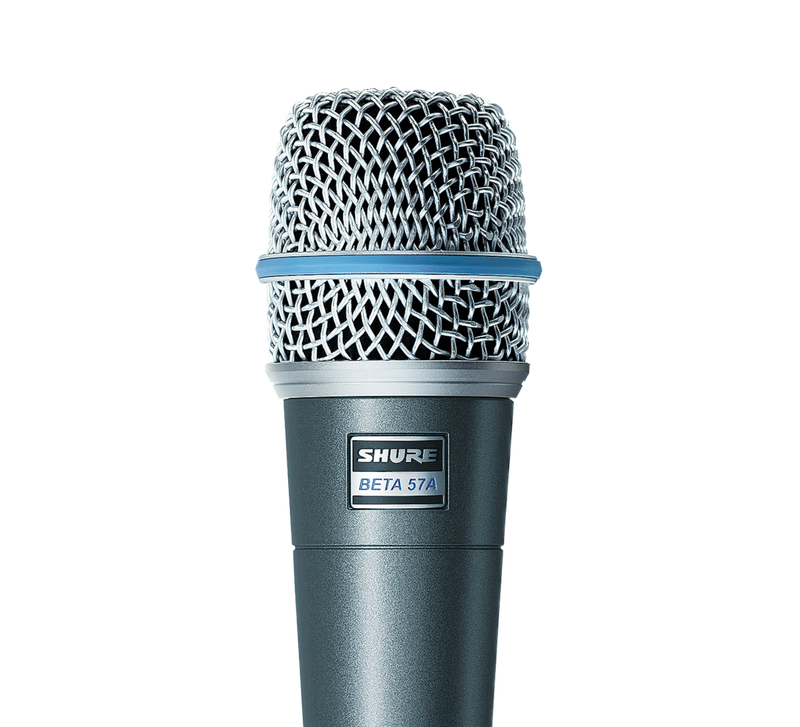
Released as a "supercharged" version of the 57, the Beta 57A isn't just a 57 with a fancy grille—it is a different beast entirely.
- Polar Pattern: Supercardioid.
This means it is more directional than the SM57, rejecting more sound from the sides but picking up a small amount from the direct rear. - The Sound: Brighter and "hotter." Thanks to its neodymium magnet, it has a higher output (about 4dB louder) and an extended high-end frequency response ($50\text{Hz}$ to $16\text{kHz}$).
- The Grille: It features a hardened blue-ish grille that is much harder to dent. It also includes an integrated pop filter, making it significantly more versatile for vocal use than the standard SM57.
- Best For: Vocals, acoustic instruments, and guitar amps that need a bit more "sparkle" or "bite."
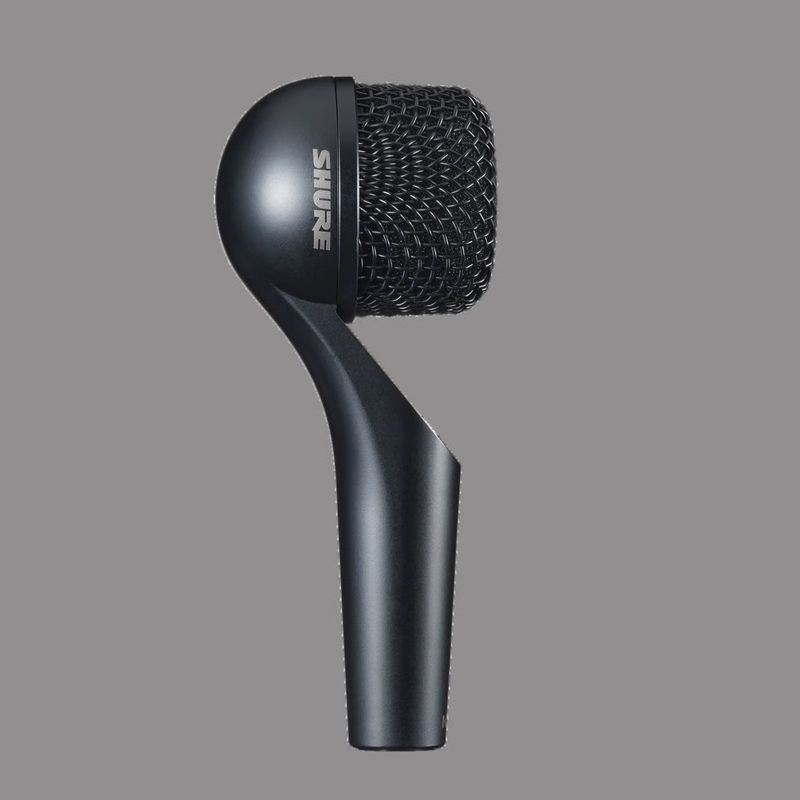
3. Shure Nexadyne 5 (NXN5): The Modern Precision
The Nexadyne 5 represents Shure’s leap into the next generation of transducer technology.
- Polar Pattern: Supercardioid.
- The Sound: Exceptionally clear and "hi-fi." While the SM57 can feel "boxy" and the Beta 57A can feel "hyped," the Nexadyne 5 feels natural. It captures the nuance of your picking attack and the true character of your amp with stunning detail.
- The Tech: The dual-engine design cancels out unwanted mechanical vibrations and handling noise, resulting in a signal that requires much less EQ in the mix.
- Best For: Professional touring, high-end studio guitar tracking, and anyone who wants a "mix-ready" sound straight out of the mic.
How to Use Them: Placement & Tips
On a Guitar Cabinet
- SM57: Place it 1 inch from the grille cloth, aimed halfway between the center of the speaker cone and the edge. This provides that classic "rock" mid-range.
- Beta 57A: Use this if you find the SM57 too dark. The supercardioid pattern is great if you are recording a loud band in one room, as it rejects more stage bleed.
- Nexadyne 5: Use the integrated swivel mount to find the "sweet spot" on the speaker. Because it’s so clear, you can often place it dead-center on the cone for maximum detail without it becoming "ice-picky."
On Vocals
- SM57: You must use a pop filter (like the A2WS) to avoid "P-pops." It’s a great choice for aggressive rock or punk vocals.
- Beta 57A: A fantastic live vocal mic. It’s brighter than an SM58 and helps a singer cut through a loud stage mix.
- Nexadyne 5: While the NXN5 is marketed for instruments, its "Revonic" brothers (the Nexadyne 8/C and 8/S) are the dedicated vocal versions. Use the 5 for capturing the "air" of an acoustic guitar or the snap of a percussionist.
Final Verdict: Which is Most Versatile?
If you can only own one, the Beta 57A is arguably the most versatile because it works exceptionally well on both vocals and instruments.
However, if you are a guitarist looking for the ultimate representation of your rig, the Nexadyne 5 is the new king of the hill. It takes the "workhorse" concept of the 57 and adds a layer of professional polish that makes it feel like you've upgraded your entire signal chain.
Powered by Lightspeed
Display prices in:USD