Taylor’s Action Control Neck: The Long-Tenon Revolution
If you’ve kept an eye on Taylor Guitars recently, you know they are obsessed with playability. Back in 1999, Bob Taylor revolutionized the industry with the patented NT (New Technology) neck, a bolt-on design that completely eliminated the nightmare of traditional, costly neck resets.
But acoustic design never stands still. Driven by master designer Andy Powers, Taylor has introduced a groundbreaking evolution: the Action Control Neck™ featuring a brand-new Long-Tenon Neck Joint.
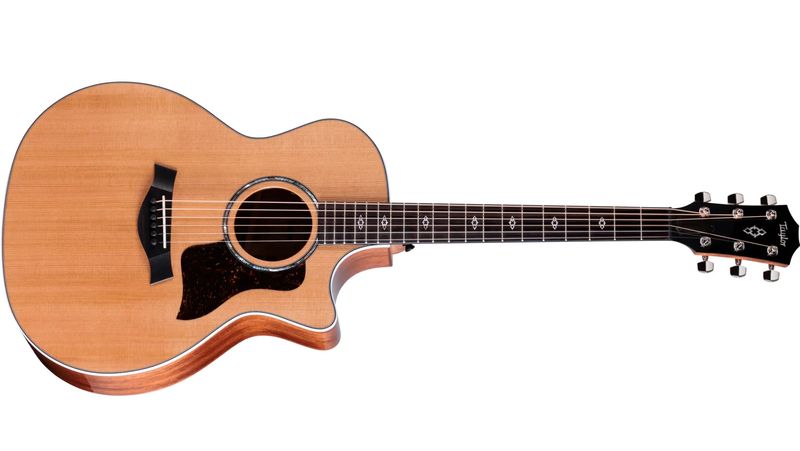
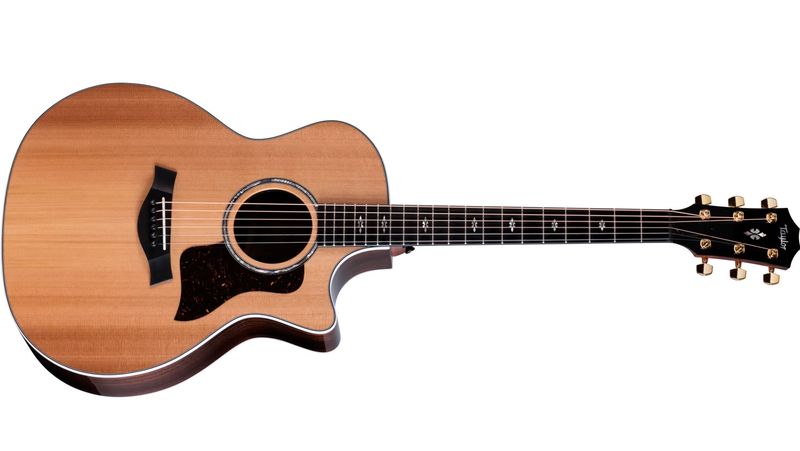
First rolled out on the premium Gold Label Collection and Next Generation models, this design addresses two things every guitarist wants: deeper, older-heritage acoustic tone, and the ability to adjust string action on the fly.
Let’s break down the engineering behind this new long-tenon setup and explain exactly how it changes the game for your hands and your ears.
What is a Long-Tenon Neck Joint?
In guitar lutherie, a "tenon" is the extension of the wood on the guitar neck that inserts into a corresponding pocket (the mortise) in the body's internal neck block.
Traditional acoustic bolt-on necks typically feature a relatively short heel extension. Taylor’s new design uses a long tenon that extends significantly deeper into the body's structural neck block.
By drastically increasing the surface-to-surface wood coupling between the neck and the body, Taylor has created an incredibly rigid, glueless foundation. Think of it like anchoring a fence post twice as deep into the ground—the stability increases exponentially.
The Tonal Impact: Wood Coupling Equals Warmth
Historically, die-hard fans of traditional vintage acoustics argued that bolt-on necks lacked the deep, woody resonance of a traditional glued dovetail joint. Taylor’s long-tenon joint completely shatters that stereotype.
Because the neck wood is coupled so deeply into the heart of the body, the transfer of vibrational energy between the strings, the neck, and the soundboard is seamless. Real-world testing shows a massive benefit:
- Increased Low-End Resonance: The deep wood coupling coaxes a warmer, blooming bass response out of the guitar.
- An "Old-Soul" Tonal Profile: Paired with bodies like Taylor's Super Auditorium shape, this joint delivers a round, woody treble and a mature, broken-in character that sounds more like a prized 1930s or '40s acoustic than a modern, hyper-bright guitar.
The Ultimate Party Trick: Action Control in Seconds
While the tone is incredible, the mechanical engineering is what will leave gigging and studio musicians floored. This long-tenon architecture is the foundation for Taylor’s new Action Control system.
On standard acoustic guitars—and even classic Taylor NT necks—if you want to permanently change your string height (action), you have to slacken the strings, remove the neck or the bridge saddle, sand down the material or swap out custom shims, and put it all back together. It’s a job usually reserved for a repair shop bench.
With the new Action Control Neck, you can adjust your string height in seconds with the strings at full tension.
Using a quarter-inch nut driver passed directly through the soundhole, you can turn an internal adjustment bolt. The neck pivots flawlessly on a precise internal point under the fingerboard extension, micro-adjusting the neck angle and string height on the fly.
Why This Matters to Real Players
This isn’t just engineering for engineering’s sake. It solves massive, real-world frustrations for different types of players:
For the Touring & Gigging Musician
Acoustic guitars are incredibly sensitive to environmental changes. If you fly from a humid climate to a dry one, the top sinks or swells, completely ruining your action by the time you hit the stage. With this system, you can perfectly re-calibrate your string height right at soundcheck without missing a beat.
For the Recording Studio
If you are tracking an acoustic session, you often need different setups for different songs. You can dial the action down low for effortless, intricate fingerstyle tracking, and then raise it back up in 10 seconds to prevent string buzz when switching to a heavy slide part or aggressive flatpicking.
Experience the Next Generation at Tone Tailors
It’s one thing to read about how a long-tenon joint transfers acoustic energy, but it’s another thing entirely to feel that vibration humming against your ribcage.
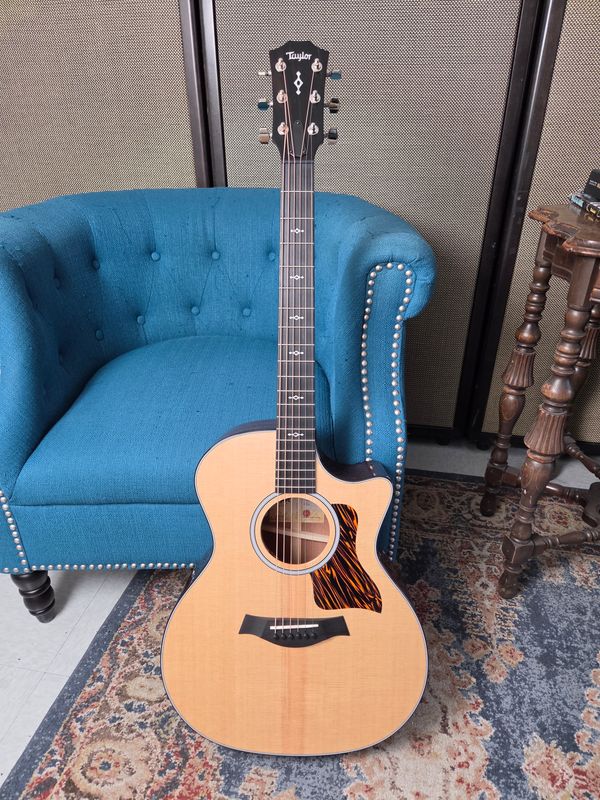
As your local authorized Taylor dealer, we love walking players through innovations like this. Stop by Tone Tailors in Lancaster, PA, to test drive a Taylor featuring the new Action Control Neck. Grab a nut driver, feel how smoothly it adjusts, and hear the deep, vintage warmth of this new design for yourself.
Refine by
Powered by Lightspeed
Display prices in:USD