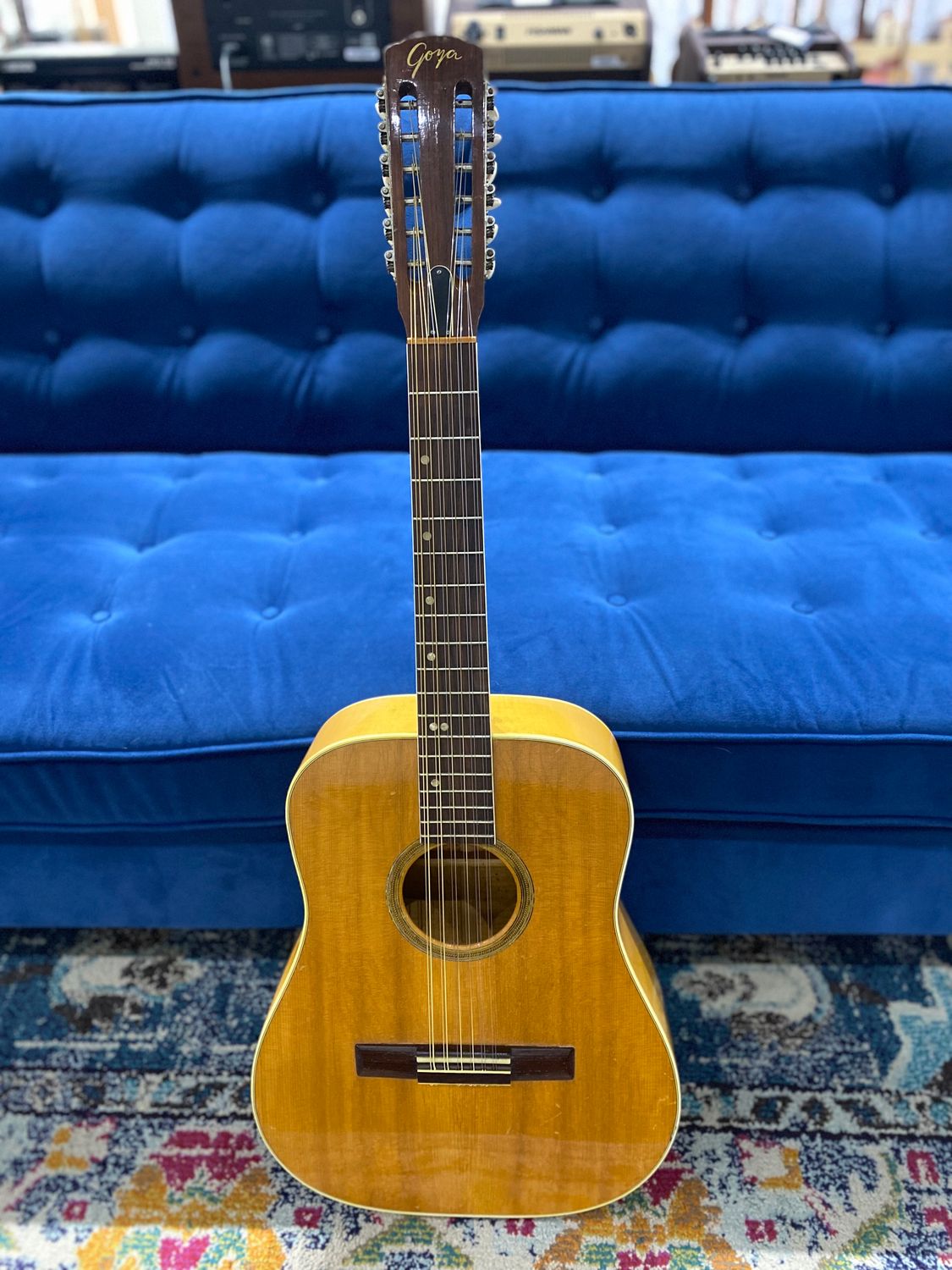
Used Goya TS5 12-string 1966 w/OHSC
$725
Sold out
Sold out
Product Details
Brand: goya
Goya TS-5 “Goliath” 12-String – 1966
(v2342)
The Goya name emerged in the 1950s, but the guitars themselves trace their lineage to one of Europe’s most respected early builders. Goya instruments were produced by the Levin factory in Gothenburg, Sweden, founded by Herman Carlson Levin, whose company had been building high-quality guitars since the early 20th century. By the late 1950s, the Goya brand—named after the Spanish painter—was introduced specifically for the American market, aligning perfectly with the exploding U.S. folk revival.
By the early 1960s, 12-strings had become central to that movement, and the TS-5 stood at the top of Goya’s catalog. Marketed as a “Goliath” size instrument, it combined serious build quality, distinctive European design cues, and a powerful, balanced voice. While Goya guitars remain somewhat under-the-radar today, anyone familiar with the folk scene of the era—think the Ivy League Trio—has seen and heard them in action.
Construction & Appointments
- Top: spruce, natural blonde finish
- Back & sides: choice flamed maple
- Binding: black-and-white purfling; black-and-white mosaic soundhole rosette
- Bracing: ladder-braced top with multiple longitudinal braces north and south of the soundhole, plus lateral stiffening braces east and west
- Neck: mahogany, comfortable C profile
- Fingerboard: rosewood, bound in white celluloid with offset pearl position markers—an elegant nod to European Moderne styling
- Truss rod: adjustable
- Neck joint: bolt-on with additional heel bolt; only the fingerboard extension is glued—a clever and serviceable design
- Headstock: profiled shape with rosewood veneer and white silkscreened Goya logo
- Bridge: rosewood, Harmony-style string-through design with horizontal holes; white celluloid wear strips at string entry/exit points
- Heel cap: white celluloid
Dimensions
- Lower bout: 15 7/8”
- Body depth: approx. 5” at end pin
- Scale length: 24 1/2” (short scale—very comfortable for a 12-string)
- Nut width: 2”
- String spacing at saddle: 2 3/8”
These proportions recall early Holzapfel designs and make for an unusually playable large-body 12-string.
Condition & Work Performed
The guitar arrived largely original, with evidence of a past bridge reglue and a strap button added at the heel. There is a very tight grain seam visible on the bass side of the fingerboard extension.
Recent professional work includes:
- Neck reset
- New saddle
- Frets leveled and dressed
- Tuners cleaned and lubricated
The neck is straight, the finish is original, and the guitar shows expected nicks, dings, and finish checking consistent with age and honest use.
- Action: approx. 6 7/64” with plenty of saddle remaining
Tone & Character
This TS-5 delivers exactly what a great vintage 12-string should:
- shimmering, chiming highs
- a strong, supportive low end
- excellent balance and projection
It excels at 1960s folk textures but has enough body and authority to handle the deeper, more percussive styles associated with Lead Belly and Blind Willie McTell, including slide work. A rare combination of warmth, clarity, and power.
Overall
A beautifully built, highly playable vintage 12-string with undeniable character, quality materials, and classic Scandinavian craftsmanship. In our experience, this is among the better vintage 12-strings we’ve encountered—and one that remains undervalued relative to its musical and historical merit.
Included
- Original hard case (excellent condition)
Save this product for later
Customer reviews
Reviews only from verified customers
No reviews yet. You can buy this product and be the first to leave a review.
Have questions?
Used Goya TS5 12-string 1966 w/OHSC
Powered by Lightspeed
Display prices in:USD