Pedalboard Power Supplies Explained: Isolated vs. Daisy Chain
You've spent months curating the perfect pedals, dialing in your gain stages, and fine-tuning your delays. But if you don't know how to power your guitar pedals correctly, your dream rig will be plagued by hum, hiss, and potentially fried circuits.
Power isn't the most exciting part of building a pedalboard, but it is the foundation. Here is what you need to know about powering your pedalboard correctly to keep your signal clean and quiet.
The Daisy Chain: Good for Beginners
A daisy chain is exactly what it sounds like: a single wall adapter connected to a cable with multiple barrel plugs, running power to several pedals in a row.
- The Pros: They are cheap, easy to throw in a gig bag, and generally fine if you are only running a small board with two or three low-draw analog pedals (like a simple tuner, an overdrive, and a fuzz).
- The Cons: The power running through a daisy chain is not isolated. This means all your pedals are sharing the exact same electrical ground. When you mix digital pedals (like modern delays or reverbs) with analog dirt pedals on a daisy chain, the digital pedals often leak their internal clock noise into the signal path. This creates a very noticeable, high-pitched whine that gets louder when you step on your overdrive.
The Isolated Power Supply: Professional Grade
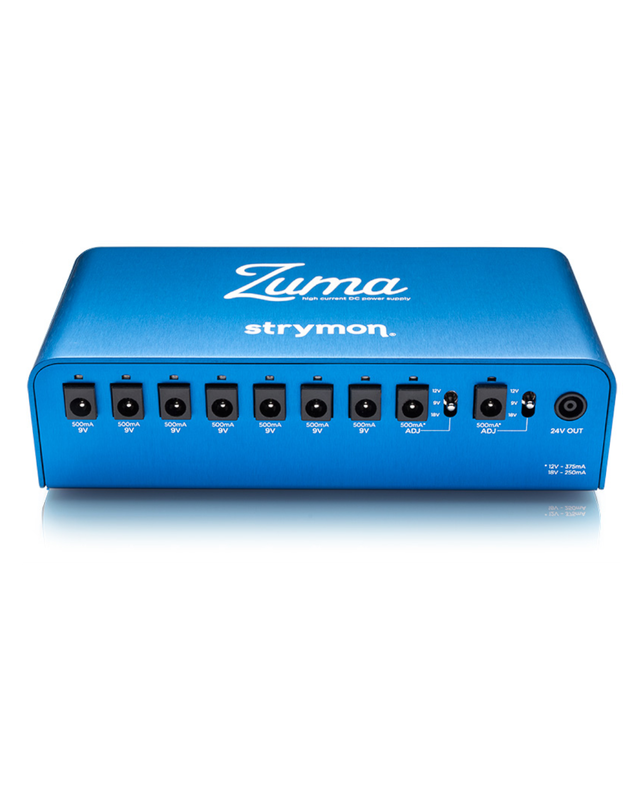
An isolated power supply is a larger brick that mounts under your board and features individual transformers (or advanced switching tech) for every single output.
- Why you need it: It acts as if every single pedal on your board is plugged into its own completely separate wall outlet. This prevents the pedals from interacting with each other's power draw, completely eliminating ground loops and digital clock noise.
- The Result: A pristine, studio-quiet signal floor. If you are playing live or tracking music, an isolated supply is essentially a requirement for a professional-sounding rig. You can check out our current power supplies here to see the different sizes available.
Quick Comparison
|
Feature |
Daisy Chain |
Isolated Power Supply |
|
Cost |
Low |
Moderate to High |
|
Best For |
2-3 analog pedals |
Mixed analog/digital boards, larger rigs |
|
Noise Level |
Prone to hum and high-pitched whine |
Dead quiet; studio grade |
|
Safety |
Shared ground, higher risk of overloading |
Individual protected outputs |
Pro Tips: Voltage, Current, and Polarity
Getting an isolated supply is step one, but you still need to plug the right cables into the right slots. Getting this wrong is a heartbreaking mistake. Over at the repair bench, JP spends a lot of time reviving pedals that got zapped because of a simple power mix-up.
Keep these three rules in mind before you plug anything in:
1. Voltage (V) Must Match Exactly
Most pedals run on 9V, but some require 12V, 18V, or even 24V. You must give the pedal the exact voltage it asks for. Plugging a 9V pedal into an 18V slot will fry the circuit immediately. (Conversely, plugging an 18V pedal into a 9V slot won't break it, but it will sound weak and heavily distorted).
2. Current Draw (mA) Must Be Met or Exceeded
Current is measured in milliamps (mA). Analog overdrives usually only need about 10mA to 20mA, while big digital delays might need 300mA or more. Your power supply output must offer at least what the pedal needs.
- The golden rule: A pedal only "drinks" as much current as it needs. It is perfectly safe to plug a 20mA overdrive into a 500mA output.
3. Check the Polarity
Almost all guitar pedals use "Center Negative" polarity (look for a little diagram on the pedal showing a minus sign inside a half-circle). However, some older vintage pedals or oddball fuzzes use "Center Positive." Using the wrong polarity will prevent the pedal from turning on and can cause serious internal damage.
If your board is getting too noisy, or if you're outgrowing your current daisy chain setup, bring your trades in to upgrade. We can help you figure out the exact voltage and current requirements for your specific pedals and get your rig running perfectly quiet.
Refine by
Powered by Lightspeed
Display prices in:USD