Does a Cutaway Actually Ruin Your Acoustic Guitar’s Tone?
Does a Cutaway Actually Ruin Your Acoustic Guitar’s Tone?
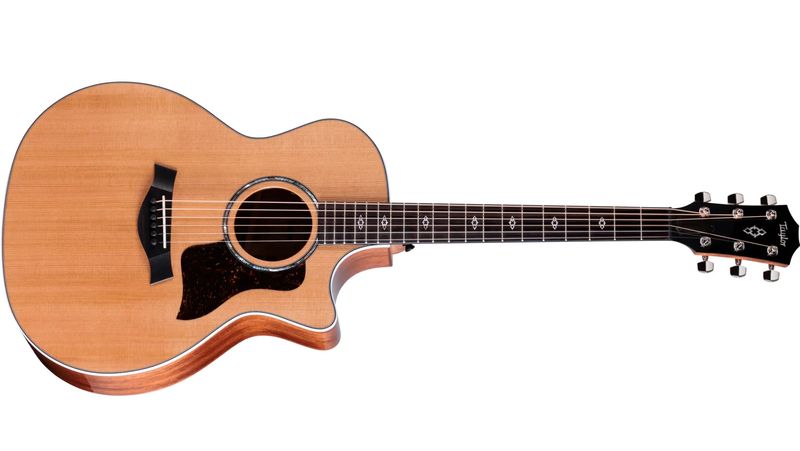
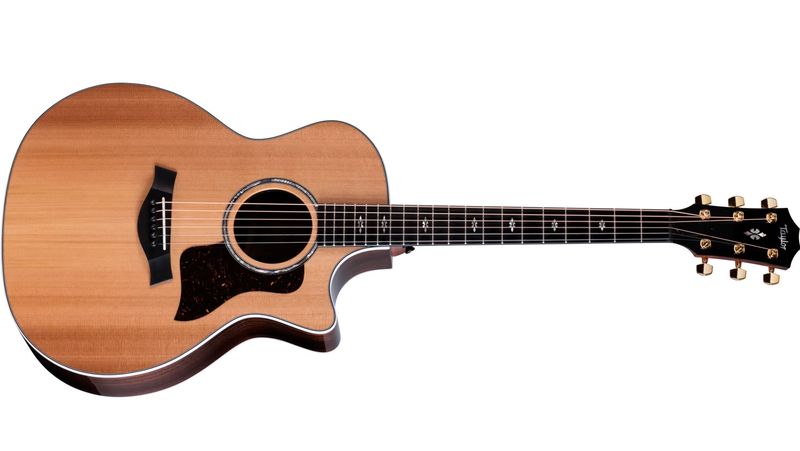
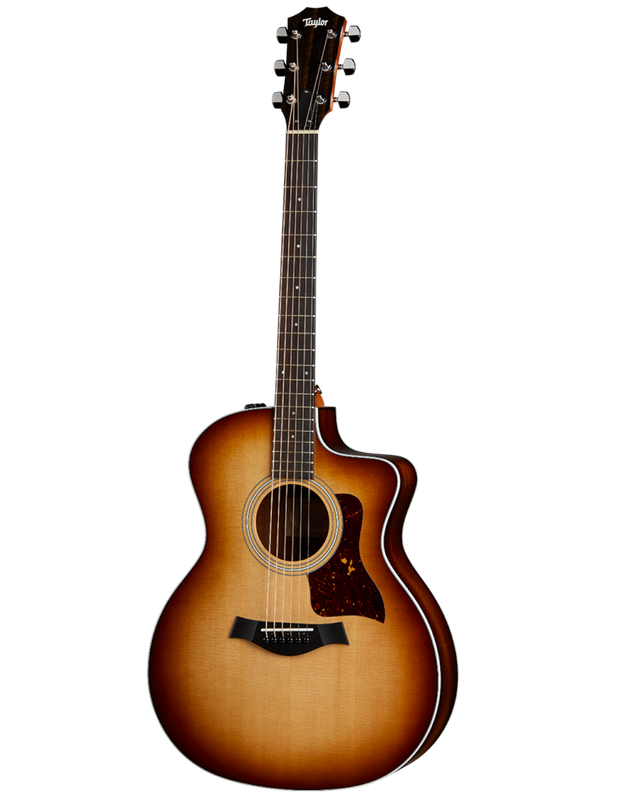
It’s a question we hear constantly at Tone Tailors. A player drives in from Harrisburg or York, sits down in our acoustic room at 617 N Prince St., and eyes a beautiful Taylor with a cutaway. But then the hesitation sets in: "If they cut out that big chunk of wood so I can reach the high frets, doesn't that kill the bass response and overall volume?"
In fact, Taylor Guitars officially lists this as one of their most frequently asked questions.
It makes logical sense. An acoustic guitar is essentially an air pump—a resonant chamber where the top wood vibrates, pushes air, and projects sound out of the hole. It seems obvious that removing a section of that chamber would mean less air, less vibration, and a thinner tone.
But the reality of acoustic physics tells a different story. Here is why you shouldn't fear the cutaway.
The Physics of the Soundboard
To understand how a cutaway affects tone, you have to look at how an acoustic guitar actually generates sound.
The top of your guitar (the soundboard) doesn't vibrate evenly all over. The vast majority of the vibration—the heavy lifting that creates your volume, projection, and bass response—happens in the lower bout. This is the wide, rounded bottom half of the guitar where the bridge is mounted. The string tension pulls on the bridge, which acts like the driver of a speaker cone, pumping the lower half of the soundboard up and down.
The upper bout (the "shoulders" of the guitar near the neck) is heavily braced and reinforced to withstand the massive structural tension of the neck pulling against the body. Because it is so stiffly braced, the upper bout vibrates very little.
The Microscopic Difference
Because the area where a cutaway is carved is acoustically "dead" compared to the lower bout, removing that wood has an incredibly negligible effect on the instrument's overall voice.
If you were to take two identical guitars built on the exact same day from the same trees—one with a cutaway and one without—and measure them with highly sensitive studio microphones, you might detect a microscopic reduction in some bass frequencies. But to the human ear in a room, on a stage, or even in a mix? The difference is practically imperceptible.
Taylor's master builders, as well as the experts at Martin, generally agree: the tonal shift caused by a cutaway is so small that it is vastly overshadowed by natural variations in the wood itself. Two non-cutaway guitars will sound more different from each other than a cutaway and a non-cutaway model.
The Verdict: Playability Wins
If you never play past the 12th fret and you love the traditional, symmetrical look of a full-bodied dreadnought, skip the cutaway!
But if you are a lead player, a fingerstyle guitarist, or someone who likes to explore the upper register of the fretboard, a cutaway is a massive upgrade in playability with no real-world penalty to your tone.
The best way to silence the debate is to hear it for yourself. Next time you're in Lancaster, stop by the shop. We've been matching players with their perfect acoustics since 2015, and we'll gladly hand you a cutaway and a traditional body shape to let your own ears decide.
Refine by
Powered by Lightspeed
Display prices in:USD